


The evolution of online gaming avatars mirrors the technological advancements and cultural shifts in the gaming industry. From the earliest days of simplistic pixelated figures to today’s highly customizable and lifelike digital personas, avatars have undergone a dramatic transformation. These digital representations are not merely characters in a game; they are extensions of players’ identities, a means of expression, and a pivotal aspect of the gaming experience.
The importance of avatars extends beyond mere visual representation. They play a critical role in how players interact with the game world and with each other. Whether it’s through expressing one’s identity, engaging in social interactions, or even competing in eSports, avatars are central to the gaming experience. As we delve deeper into the evolution of online gaming avatars, we’ll explore their humble beginnings, their growing importance in personal identity and customization, the technology that powers them, and the exciting future trends that await us. For those looking to enhance their gaming experience, exploring options like the leading $1 deposit casino for NZ players or investing in high-quality gaming equipment and accessories can provide a great start.
A look at the first avatars in online games
The concept of avatars in gaming can be traced back to the early 1980s, a time when video games were in their infancy and graphical limitations were significant. Early avatars were simple pixelated figures, often no more than a few dozen pixels in size, representing characters that players controlled. Despite their simplicity, these early avatars laid the foundation for what would become a crucial aspect of online gaming.
Games like Adventure on the Atari 2600 and Rogue on early personal computers featured some of the first avatars. These characters were primarily functional, designed to navigate through mazes or dungeons, fight enemies, and collect items. The visual representation was minimal and often abstract, but it was enough to give players a sense of agency and control within the game world.
As online multiplayer games began to emerge, avatars became more complex. Habitat, an early online role-playing game developed by Lucasfilm Games in the mid-1980s, is often credited with being one of the first to feature avatars in a social online environment. In Habitat, players could choose from a variety of characters, customize their appearance to a limited extent, and interact with other players in a virtual world. This game laid the groundwork for the social aspects of avatars, highlighting their potential for personal expression and community building.
The 1990s saw further advancements with the rise of massively multiplayer online role-playing games (MMORPGs) like Ultima Online and EverQuest. These games introduced more detailed avatars with a greater range of customization options. Players could choose their character’s race, class, and appearance, allowing for a deeper level of personalization. This era marked the beginning of avatars becoming a key component of a player’s identity within the game world.
Customization and identity
In early games, customization options were limited, often restricted to choosing a character’s color or basic attributes. However, as technology advanced, so did the possibilities for avatar personalization. Modern games offer an extensive array of customization options, from physical appearance to clothing, accessories, and even personality traits. Players can spend hours tweaking every detail of their avatar to ensure it represents them accurately or embodies a character they wish to role-play.
The importance of avatar customization extends beyond aesthetics. It plays a crucial role in how players perceive themselves and interact with others in the game world. For many, their avatar is an extension of their real-world identity, a way to explore different aspects of themselves in a virtual space. This is particularly evident in games with social elements, such as MMORPGs and virtual worlds like Second Life, where players use their avatars to socialize, build communities, and even participate in virtual economies.
Customization also fosters a sense of ownership and attachment to one’s avatar. When players invest time and effort into creating and evolving their digital persona, they become more engaged with the game. This emotional connection can enhance the overall gaming experience, making it more immersive and meaningful.
The tech that makes modern avatars possible
The evolution of online gaming avatars from simple pixelated figures to highly detailed and customizable personas is largely driven by advancements in technology. Several key technologies have played pivotal roles in this transformation, making modern avatars more realistic, dynamic, and interactive than ever before.
-
Graphics and rendering
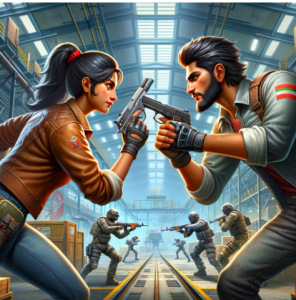
The leap from 2D to 3D graphics was a major milestone in avatar development. Early games relied on basic 2D sprites, but the advent of 3D graphics allowed for more complex and lifelike avatars. Advances in rendering techniques, such as texture mapping, shading, and lighting, have further enhanced the visual fidelity of avatars, making them more immersive and believable.
-
Animation and motion capture
Modern avatars benefit greatly from sophisticated animation techniques. Motion capture technology, where real-life movements of actors are recorded and translated into digital animations, has brought a new level of realism to avatar movements. This technology is widely used in games to create lifelike animations for characters, enhancing the player’s sense of immersion.
-
Artificial intelligence
Artificial intelligence (AI) plays a crucial role in making avatars more dynamic and responsive. AI-driven avatars can exhibit complex behaviors, interact with players and the environment in meaningful ways, and even learn from player interactions. This creates a more engaging and interactive experience, as avatars can adapt and respond to the player’s actions.
-
Virtual and augmented reality
The rise of virtual reality (VR) and augmented reality (AR) has opened new frontiers for avatars. In VR, players can inhabit their avatars in a fully immersive environment, experiencing the game world from a first-person perspective. AR integrates avatars into the real world, allowing for interactive experiences that blend digital and physical realities. These technologies are pushing the boundaries of how avatars are created and experienced.
What to expect in the evolution of avatars
The future of online gaming avatars is poised to be even more exciting and transformative, driven by ongoing advancements in technology and evolving player expectations. Here are some of the key trends and developments we can expect to shape the future of avatars.
-
Hyper-realistic avatars
As graphics technology continues to advance, we can expect avatars to become even more lifelike. Hyper-realistic avatars featuring detailed facial expressions, realistic skin textures, and natural movements will enhance the immersion and emotional connection players feel with their digital counterparts. This level of realism will be particularly impactful in VR environments, where players can experience a deeper sense of presence.
-
Personalized avatars through AI
Artificial intelligence will play a significant role in the personalization of avatars. AI algorithms can analyze player behavior, preferences, and interactions to create highly personalized avatars that evolve over time. These avatars will not only reflect the player’s current choices but also adapt and grow based on their experiences, making them more dynamic and reflective of the player’s journey.
-
Cross-platform avatars
With the increasing interconnectedness of gaming platforms, the concept of cross-platform avatars is gaining traction. Players will be able to use a single avatar across multiple games and platforms, creating a unified digital identity. This trend will be facilitated by advances in cloud computing and blockchain technology, which can securely manage and synchronize avatar data across different environments. Cross-platform avatars will allow players to maintain consistency in their online persona, regardless of the game or device they are using.
-
Metaverse integration
The concept of the metaverse—a collective virtual shared space that encompasses multiple digital worlds—is becoming increasingly popular. In the metaverse, avatars will play a central role, serving as the primary means of interaction and identity. Players will be able to use their avatars to move seamlessly between different virtual experiences, whether they are playing games, attending virtual events, or engaging in social interactions. The integration of avatars into the metaverse will create new opportunities for socialization, commerce, and entertainment.
In conclusion, as avatars continue to evolve, they will undoubtedly play an even more significant role in shaping the future of online gaming and the communities that form within these virtual worlds.
